Our Work
We work with excluded young people aged 12-18 through a range of interventions, using the power of rugby, long-term mentoring and life skills development to help them develop real world skills, build resilience, and create pathways to education and employment.
Our approach is built around four core pillars: developing life skills, raising aspirations, improving physical health, and supporting mental wellbeing. Young people are at the heart of everything we do.
Provisions
Alternative Provisions & Pupil Referral Units
Youth Offender Institutions and Secure Estates
Mainstream Schools
Youth / Sports clubs
Where we work
Regions
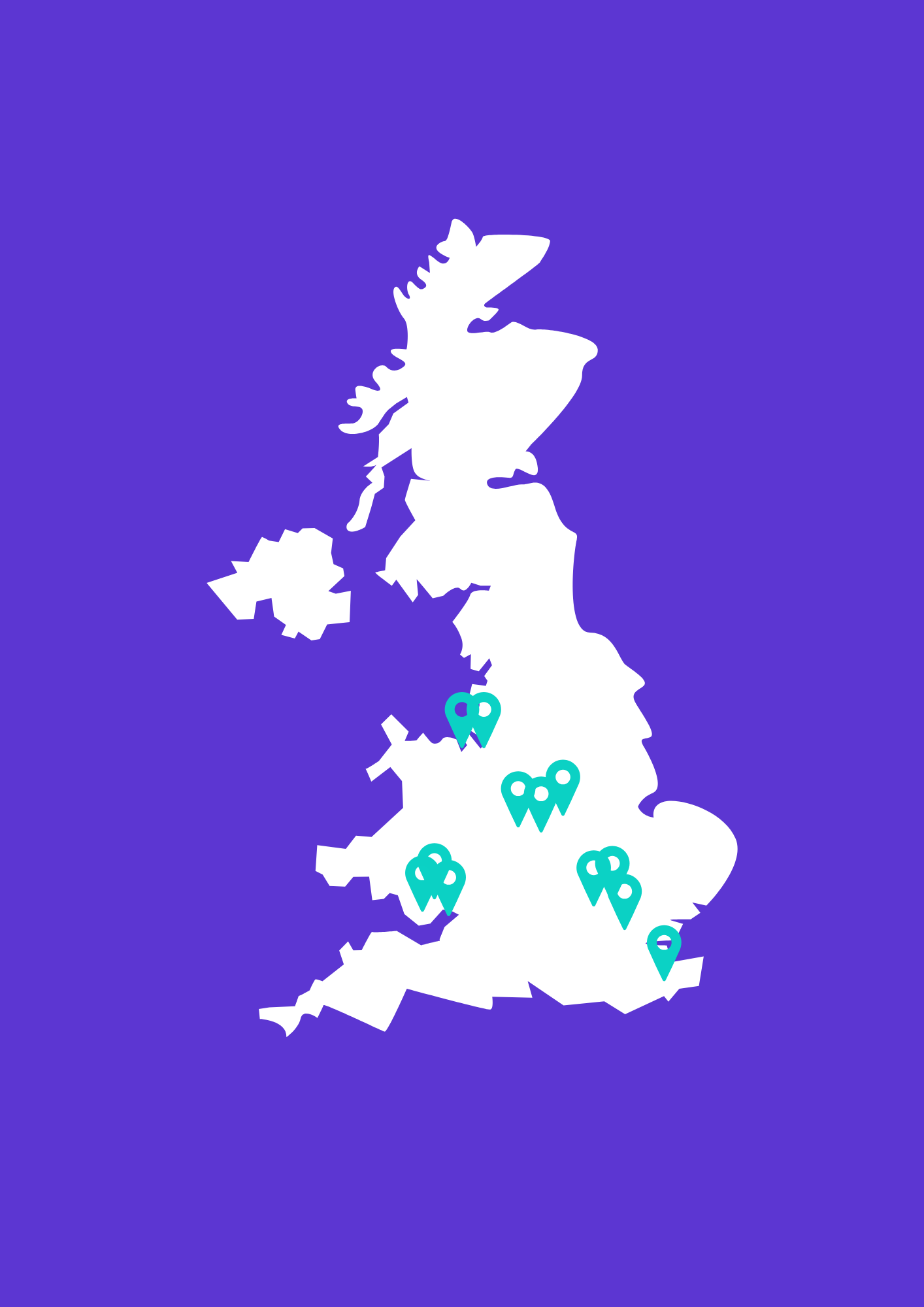
North West (Liverpool, Birkenhead)
Midlands (Birmingham, Coventry, Leicester)
Wales (Merthyr, Cardiff, Bridgend)
London (South, North, West, East)
East of England (Luton, Stevenage, Hertfordshire)
Hastings

Evening intervention
This intervention supports young people once the school day is over. We know that young people are more likely to be the victims of or perpetrators of youth violence or anti-social behaviour between the hours of 3pm–7pm. Evening sessions provide a more informal environment for young people to engage, have fun, and build trusted relationships.
-
This intervention includes:
Evening sessions: Evening provision is designed to be fun, engaging, and welcoming, creating safe spaces where young people feel comfortable, valued, and able to be themselves outside term-time intervention. Young people are encouraged to bring friends from their local community, widening engagement beyond existing cohorts.
Sports-led engagement: Sessions are primarily based around rugby and other sports, similar to term-time, using physical activity as an inclusive and effective tool to engage young people and encourage participation. Coaches adapt sessions in response to the needs, interests, and circumstances of young people, whilst aligning with our curriculum.
Community-based settings: Sessions are delivered in familiar and accessible locations including sports clubs, community centres, youth clubs, leisure centres, and schools, strengthening community connections and reducing barriers to participation.
Life skills development: Evening sessions also develop life skills with topics ranging from wellbeing, employability and digital skills.
Term-Time intervention
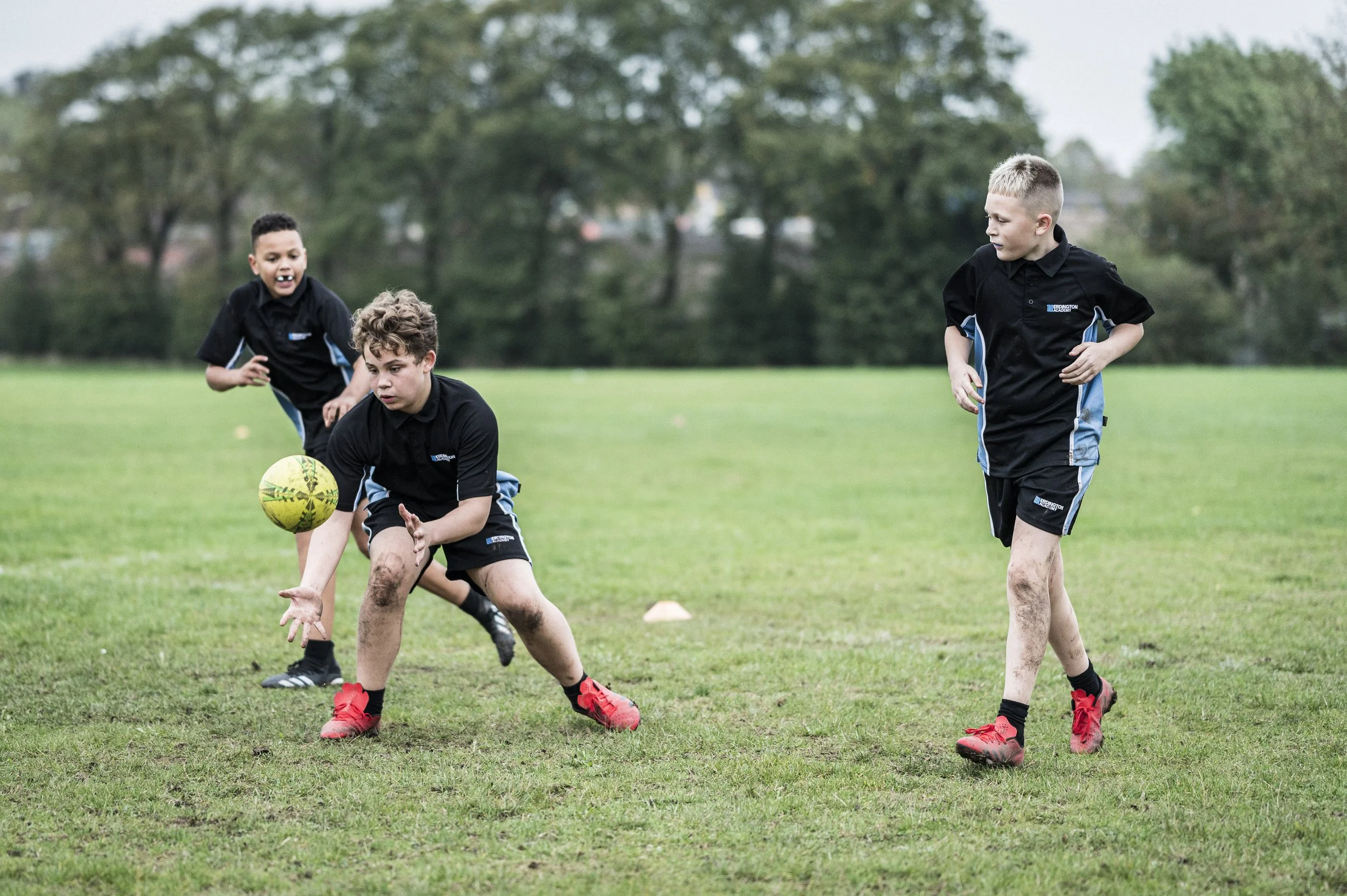
This intervention runs across an academic year, designed to build long-term impactful relationships with participants. It is a targeted, skills-based and sport-led programme, supporting young people excluded from mainstream education.
-
The intervention includes:
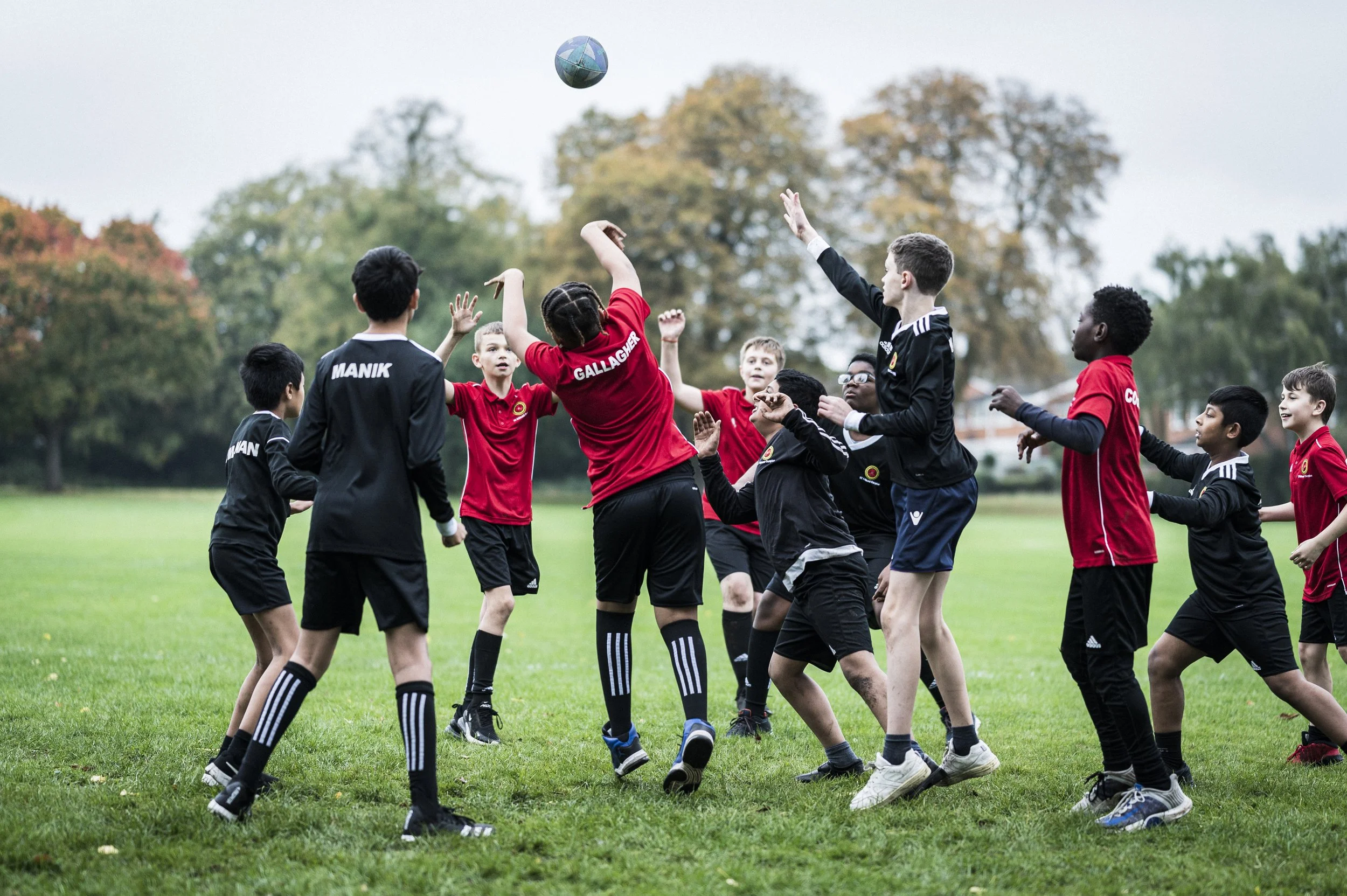
Structured sports based sessions: Using rugby as a practical tool to engage young people, develop teamwork, build physical fitness, and promote self-discipline.
Personalised mentoring: One-to-one support to help young people set goals, tackle challenges, and build resilience.
Life skills development: Workshops on communication, problem-solving, emotional wellbeing, financial literacy, and career readiness.
Wellbeing and mental health support: Integrating emotional resilience and wellbeing throughout the programme.
Meaningful employer engagement: Career Taster Days and networking opportunities
Transition support: Preparing young people for the next stage in education, training, or employment through guidance, including interview skills sessions and CV workshops
This intervention is timetabled to form part of the weekly curriculum for participants. This model is designed for Key Stage 3 & Key Stage 4 and can be delivered in mainstream schools with young people at risk of exclusion or with cohorts in PRU/AP.
Post-16 intervention
This is a new intervention designed to continue support for DRW alumni into sustainable education, employment and training. We know that the transition after age 16 can be a critical and challenging period, particularly for excluded young people who may lack confidence, networks, or clear pathways.
-
This intervention includes:
12 weeks of sessions.
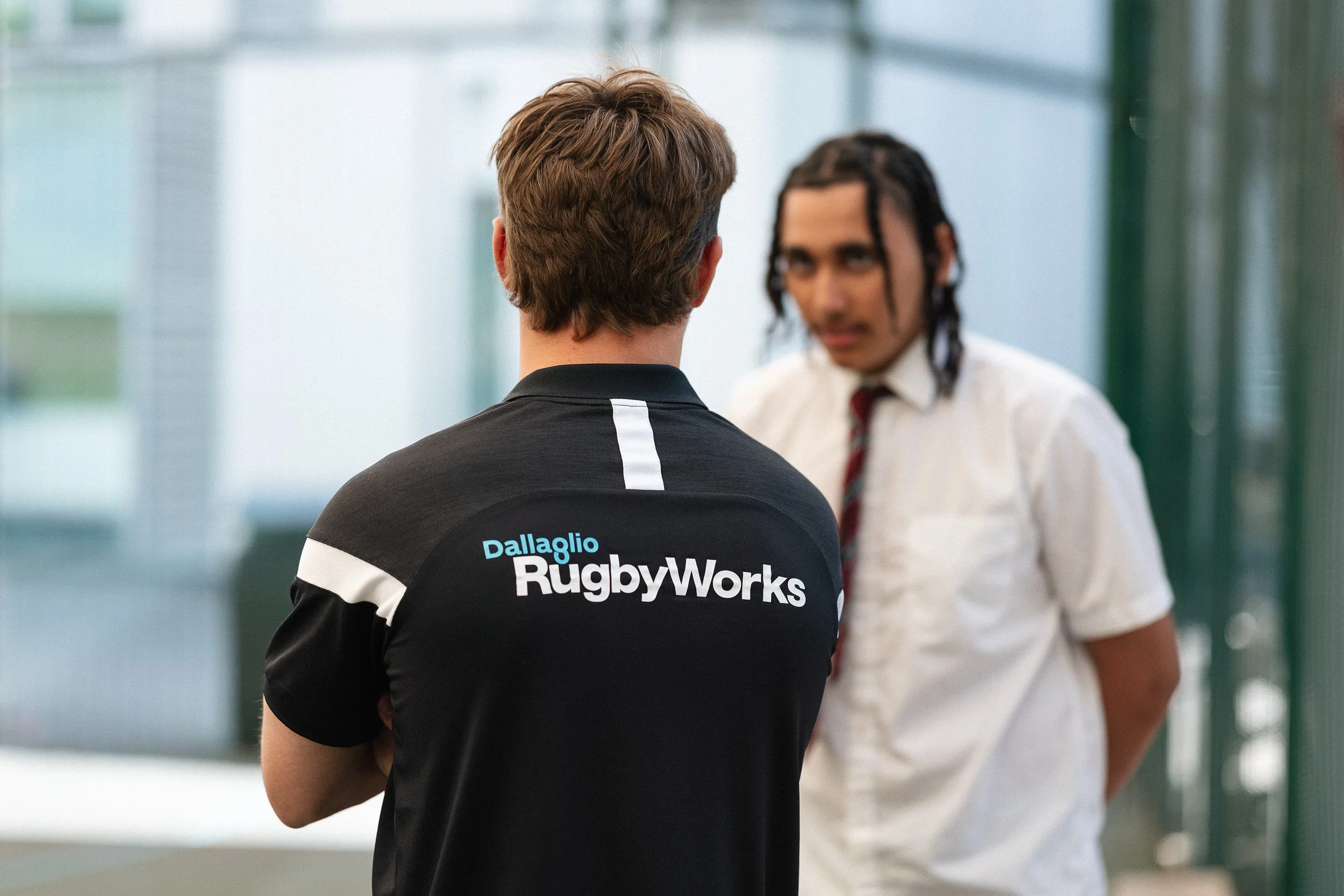
One-to-one guidance and group sessions for exploring the world of work, understanding career routes and training pathways, supporting informed decision-making about their future.
Practical workshops focused on CV writing, interview skills, job-search techniques, workplace skills, to prepare young people for employment or further study.
Activities that build essential life skills such as time management, communication, and problem-solving, supporting greater independence and confidence.
1-1 mentoring with trusted DRW coaches, providing encouragement, goal-setting, and tailored advice to help young people overcome barriers and stay motivated.
Hands-on activities, projects, or external opportunities that allow young people to apply their skills in real-world contexts.
Delivered in local, accessible youth sport clubs or youth centres.
Holiday intervention
This intervention takes place in local community settings as part of our place-based focused, offering wraparound support to the young people that need it the most when not in school.
-
The intervention includes:
Structured community-based physical activity: Structured physical activity sessions in accessible community settings and local rugby clubs during school holidays. This provides positive alternatives during periods when young people are most at risk of disengagement.
Peer inclusion & community reach: Encouraging participants to bring friends from their local community to sessions. This peer-led approach reduces isolation and strengthens community ties and helps engage young people who may not otherwise access structured support.
Sustained trusted relationships: Creating opportunities for young people to continue building trusted, positive relationships with DRW coaches beyond term-time interventions.
Food security and nutritional support: Partnering with local food charities and community organisations to provide nutritious meals during school holiday periods, when food insecurity is at its highest. Ensuring young people can fully participate in activities without hunger acting as a barrier to engagement or wellbeing.
Rugbyworks Girls
Intervention
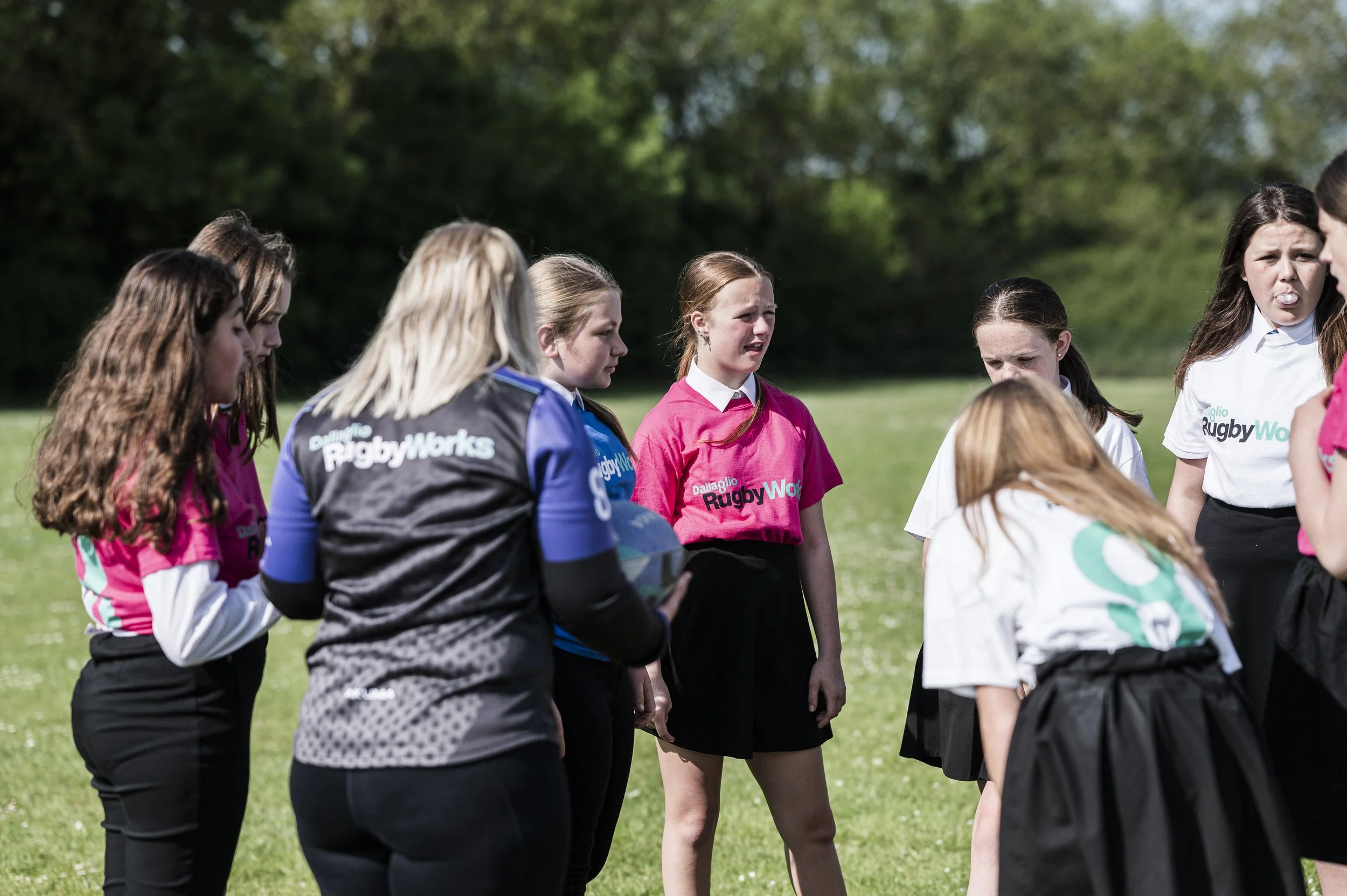
Over half of secondary girls say that girls are put off sport and physical activity because of their experiences of school sport and PE. Our girls intervention follows the same structures as our term-time intervention, an academic year long intervention. It is a targeted, skills-based and sport-led programme, designed to support young girls excluded from mainstream education.
-
This intervention includes:
See Term-Time intervention for details.
We know that young girls are roughly half as active as young boys but that 74% want to be more active. To change this, we need to be proactive and deliver interventions that are solely focused on the needs and wants of girls.
Alongside increasing physical activity, this intervention creates safe and supportive spaces to discuss important topics such as body image and consent. It also supports girls’ understanding of violence against women and girls, helping to educate them on what is acceptable behaviour, how to recognise unhealthy or unsafe situations, and where to seek support. By taking a holistic approach that values both physical and emotional wellbeing, we aim to empower girls to feel confident and informed.
Young Offenders Institutions
(YOI)
We deliver targeted interventions within secure centres to young people that have been given a custodial sentence. Through teamwork, discipline and guidance, this intervention builds young people’s confidence and life skills, supporting participants form custody to community to realise their potential and create lasting positive change.
-
The intervention incudes:
Weekly sport-based sessions: using sport to facilitate engagement and build up professional relationships with coaches and mentors.
Rehabilitation support: enabling young people to stay engaged with RugbyWorks through structured post-release sessions that build consistency and community.
Mentoring: using our lived experience coaches knowledge to provide mentoring opportunities to participants.
Life skills development: tailored roles to build leadership, teamwork, and responsibility while contributing to the community.
Corporate connections for employment: utilising RugbyWorks’ corporate partners to secure job placements, mentoring, and career opportunities to aid successful rehabilitation and reintegration into society.
Typically delivered as a 16 session programme, offering consistent, tailored support.
How our work is designed
An outline of DRW’s structured curriculum framework
How DRW puts the curriculum into practice
How DRW’s activities are designed
How DRW’s girls-specific activities are designed
Youth Voice at DRW
We believe that young people are experts in their own lives. That’s why youth voice sits at the heart of how we design and deliver our interventions, especially for young people who have experienced school exclusion and are transitioning into adulthood.
-
Through our Youth Animators programme, we use an asset-based model of youth participation that recognises and builds on young people’s strengths, skills, and lived experience. Youth Animators are young people who act as a bridge between the charity and the wider community of young people. Drawing on their lived experience, they help shape our direction, ensuring our work is informed by what young people genuinely want and need, while also building confidence, leadership skills, and a sense of purpose for themselves.
-
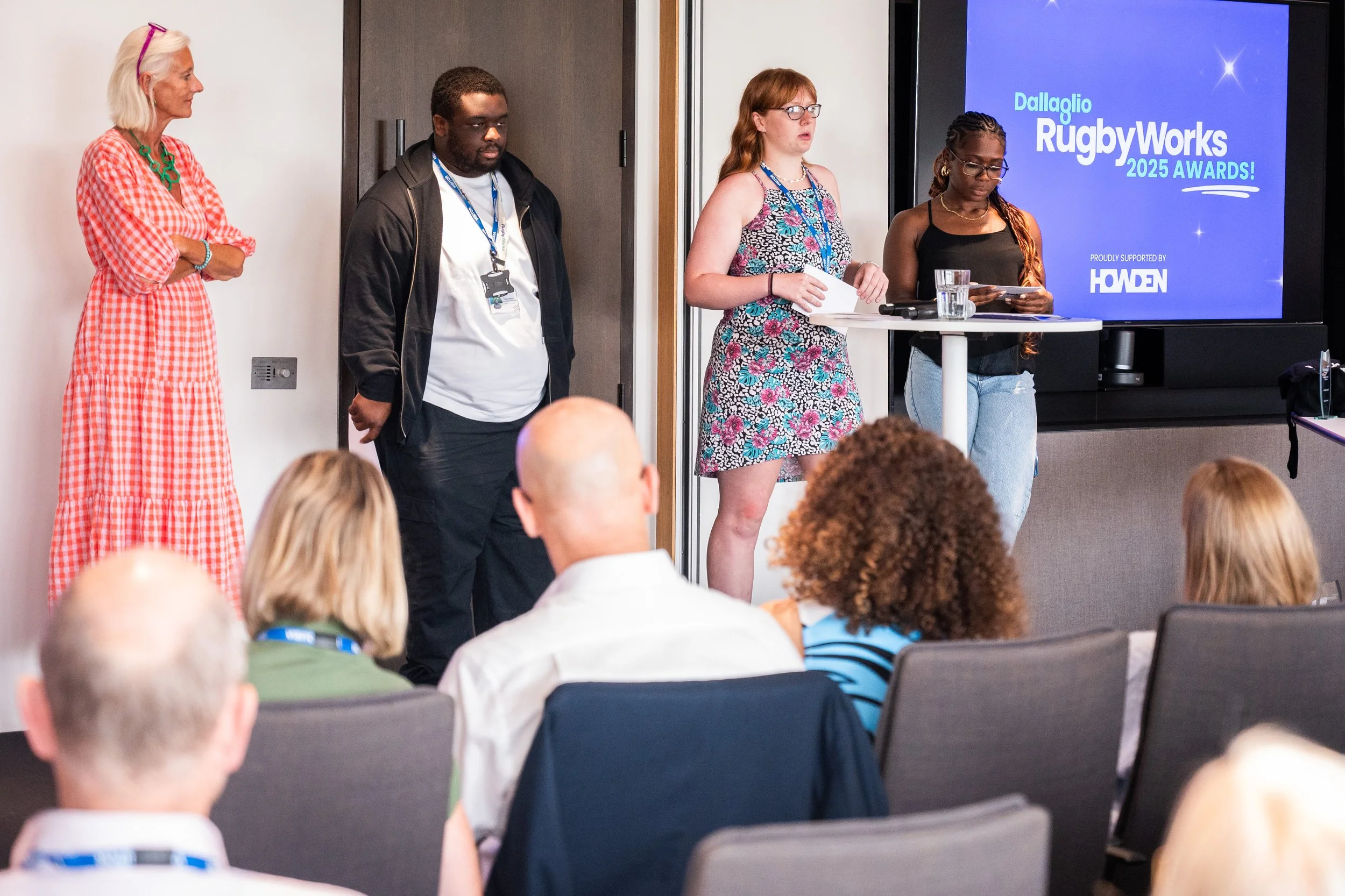
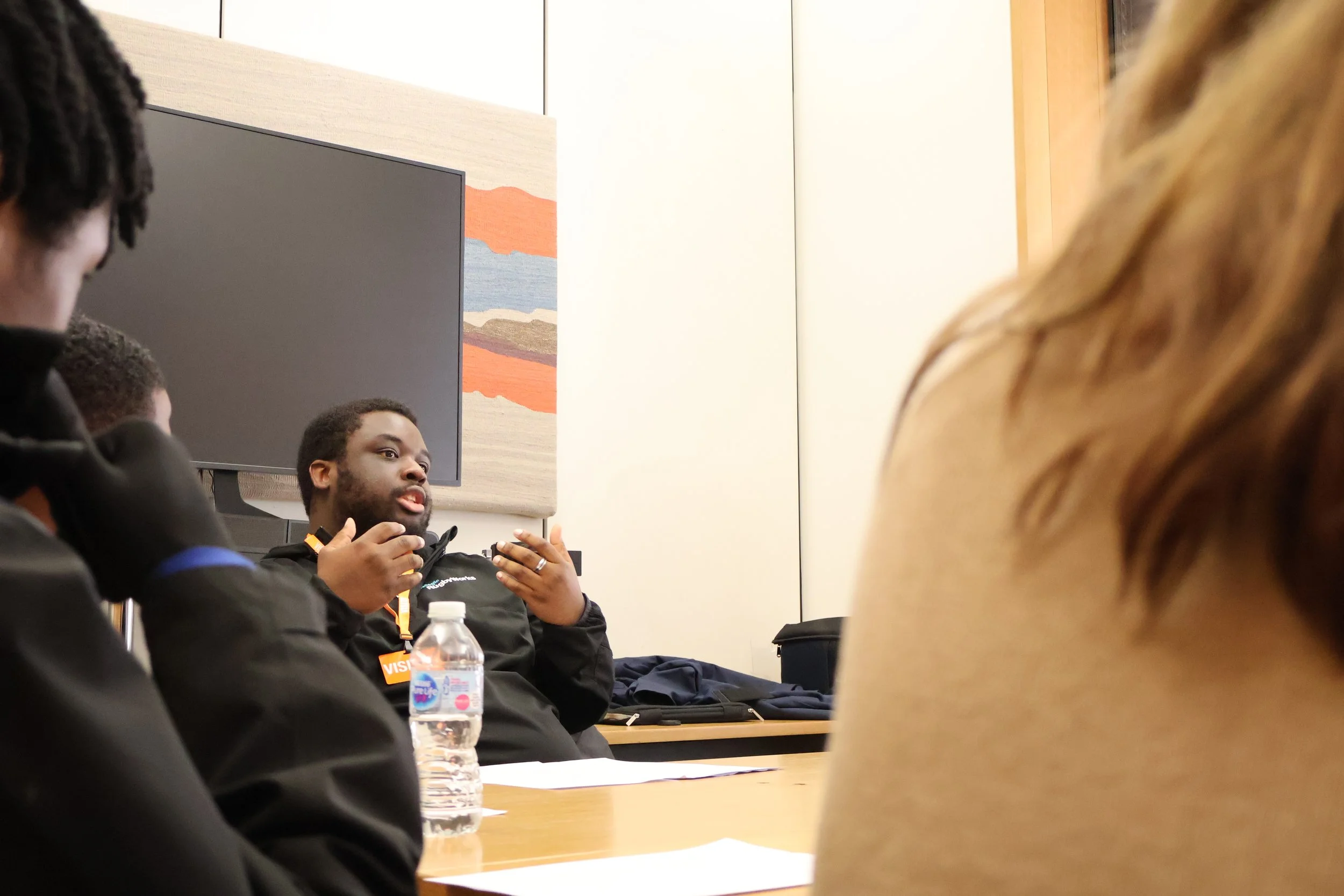
The Youth Voice Panel at Dallaglio RugbyWorks is a group of young people involved in the charity’s programmes who provide ongoing insight, feedback, and input into how the organisation communicates, engages, and makes decisions that affect them and their peers.
The panel gives honest, direct feedback on youth‑facing messaging, campaigns, outreach and content, helping us ensure its work truly reflects young people’s perspectives.
Panel members help embed youth voice in organisational decisions, meaning their lived experience plays a part in strategy, communications, and how programmes are presented and delivered.
Young people from the panel have been involved in co‑creating parts of the charity’s annual impact reports, including writing stories and shaping narratives that reflect real experiences.
By embedding this youth voice across our organisation, we create services that are more relevant, responsive, and effective.
Beyond informing our own work, the Youth Animators and Youth Voice panellists help amplify young people’s voices more widely, ensuring they are heard by policymakers, researchers, and educators, and contributing to positive change across the youth work and education sectors.